
 Book online



Don’t wait until your tooth starts to hurt. Save it with a timely endodontic examination.
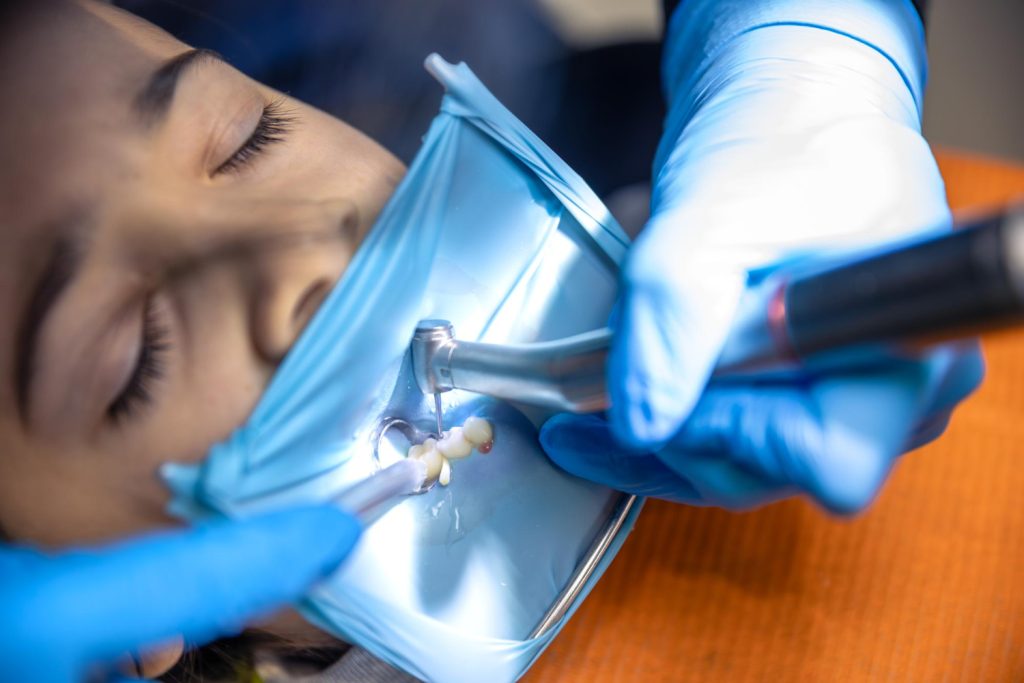
Endodontic examination is a key step in saving a tooth with damaged pulp or root canals. It allows the dentist to accurately determine the extent of the problem and propose an effective solution. Thanks to early diagnosis, pain, inflammation and even tooth loss can be prevented. This is an important basis for successful and painless endodontic treatment.
The dentist will talk to you about your concerns, tooth pain, and previous treatments to determine whether it is an acute problem or long-term damage.
He or she will then examine the tooth, gums, and surrounding structures. He or she may perform sensitivity tests to cold/warm stimuli or tapping to determine the condition of the dental pulp.
Using an X-ray, he will verify the depth of the damage, the presence of inflammation, the condition of the root canals and surrounding tissues.
Based on the results, the dentist will make an accurate diagnosis (e.g. pulpitis, dead nerve, chronic inflammation) and recommend treatment – most often endodontic treatment (root canal cleaning).
You will learn the expected number of treatments, the time schedule and the approximate price of the treatment. In case of acute pain, the dentist can proceed directly to a relief procedure.
Endodontic examination often precedes root canal treatment, also known as endodontics. Thanks to it, it is possible to save the tooth and avoid its extraction. Contact us and book an appointment for treatment.
An endodontic examination is necessary for severe tooth pain, sensitivity to hot or cold, swelling, or when an X-ray reveals a problem in the root area.
No. Endodontic examination is painless. It is mainly a diagnostic and X-ray examination.
The examination itself usually takes 20 to 30 minutes, depending on the complexity of the case and the number of teeth that need to be examined.
After the endodontic examination, your doctor will recommend further procedures – most often endodontic treatment (cleaning and filling of root canals) or other specialized procedures.
No special preparation is required. It is only recommended to inform the doctor about the medications you are taking and your health condition.
Basic endodontic examination is covered by insurance, but advanced diagnostic methods (e.g. CBCT) or follow-up treatments may be subject to a fee. The exact price will be determined after a consultation.
 Pricelist